
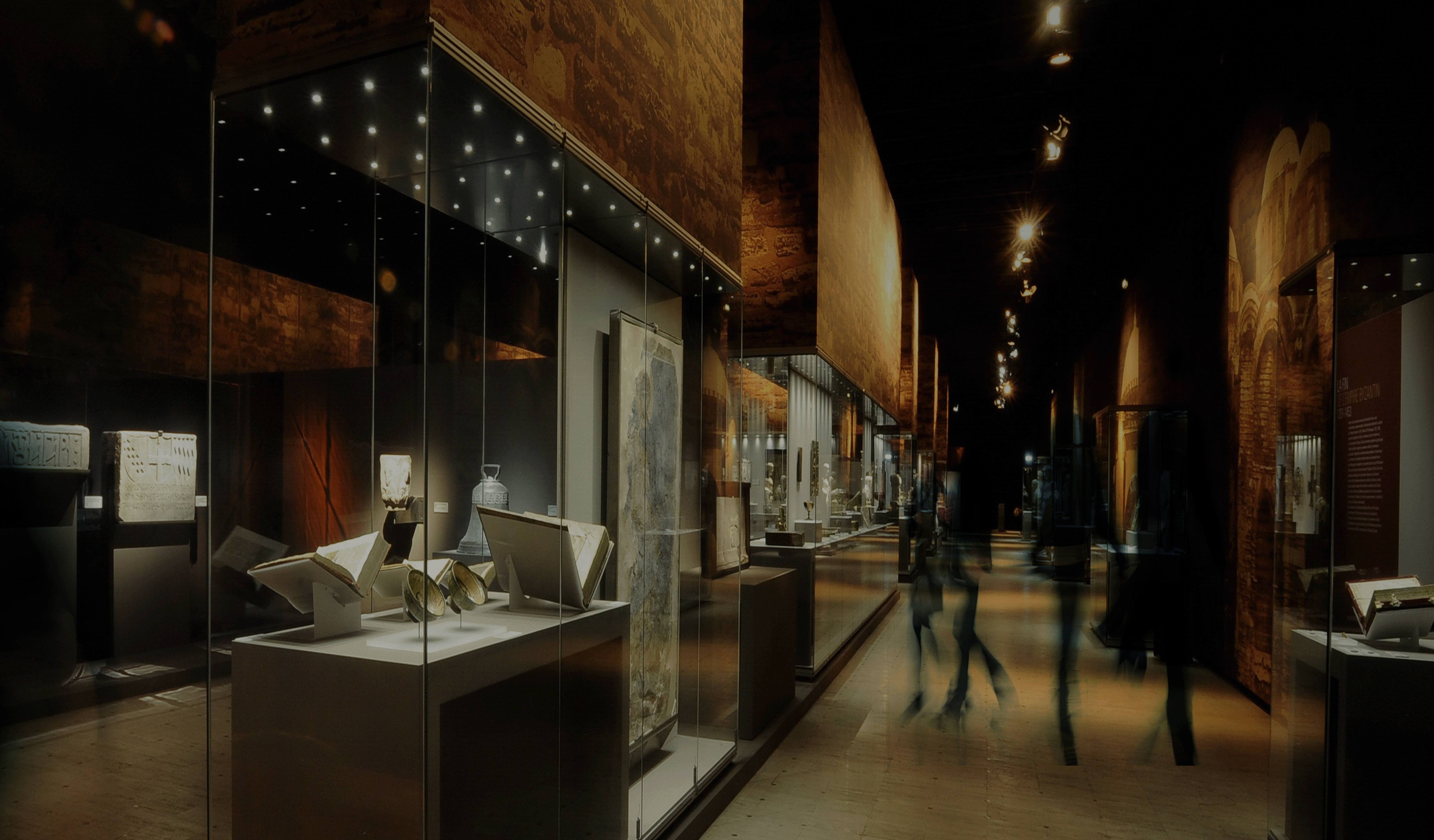
In the move toward circular exhibition design, modular and reusable display panels offer museums and cultural spaces a sustainable alternative to traditional carpentry-built walls, which are typically discarded after a single use. These adaptable systems minimize waste, lower installation costs, and allow curators to continually reshape galleries without rebuilding from scratch.
A standout example is Net Zero (2023), developed by ACCIONA Cultura and presented at the King Abdulaziz Center for World Culture (Ithra) in Dhahran, Saudi Arabia. The exhibition explored the path to carbon neutrality—using its own structure as a case study in sustainable production. “The Net Zero exhibition showcases the realities of our current environmental challenges and the hopeful visions of a better future through the work of contemporary artists,” said Candida Pestana, curator of the exhibit .
Large-scale 3D-printed concrete panels replaced conventional construction, cutting material waste by an estimated 60%. The panels were designed for reuse across future events, combining visual impact with circular functionality.
Similar approaches are being explored elsewhere. The Fundación Telefónica in Madrid has adopted a methodology that measures and reduces the environmental impact of its temporary exhibitions, including the celebrated Nikola Tesla: The Man Who Lit Up the World show.
In Germany, Museum Ludwig's, Green Modernism: The New View of Plants served as a pilot for sustainable exhibition production, reusing modular elements and minimizing carbon-intensive materials
Together, these examples reflect a quiet revolution in exhibition-making—where design becomes infrastructure, and sustainability is embedded in every wall, floor, and frame.
NEXT IN Summit is the event promoted by ACCIONA Cultura that brings together international leaders in the cultural field to share experiences, discuss ideas and analyze the challenges that will shape the future of the cultural industry.