
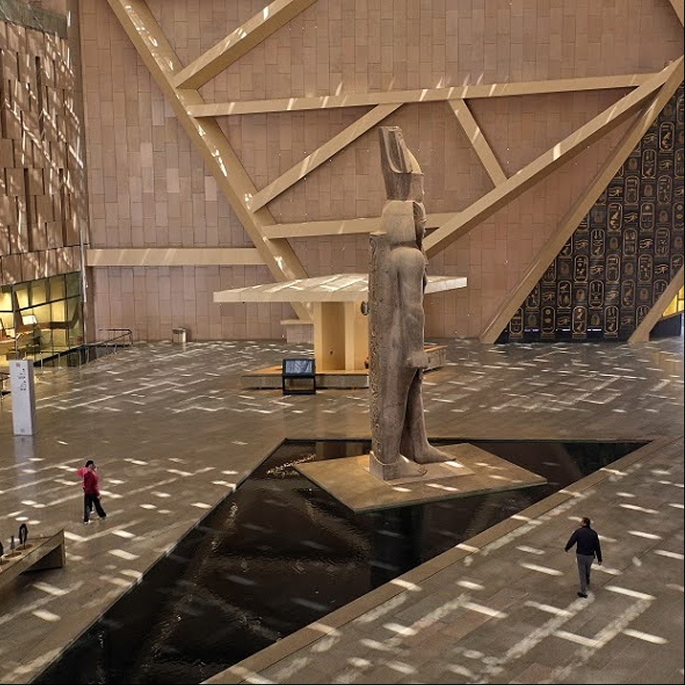
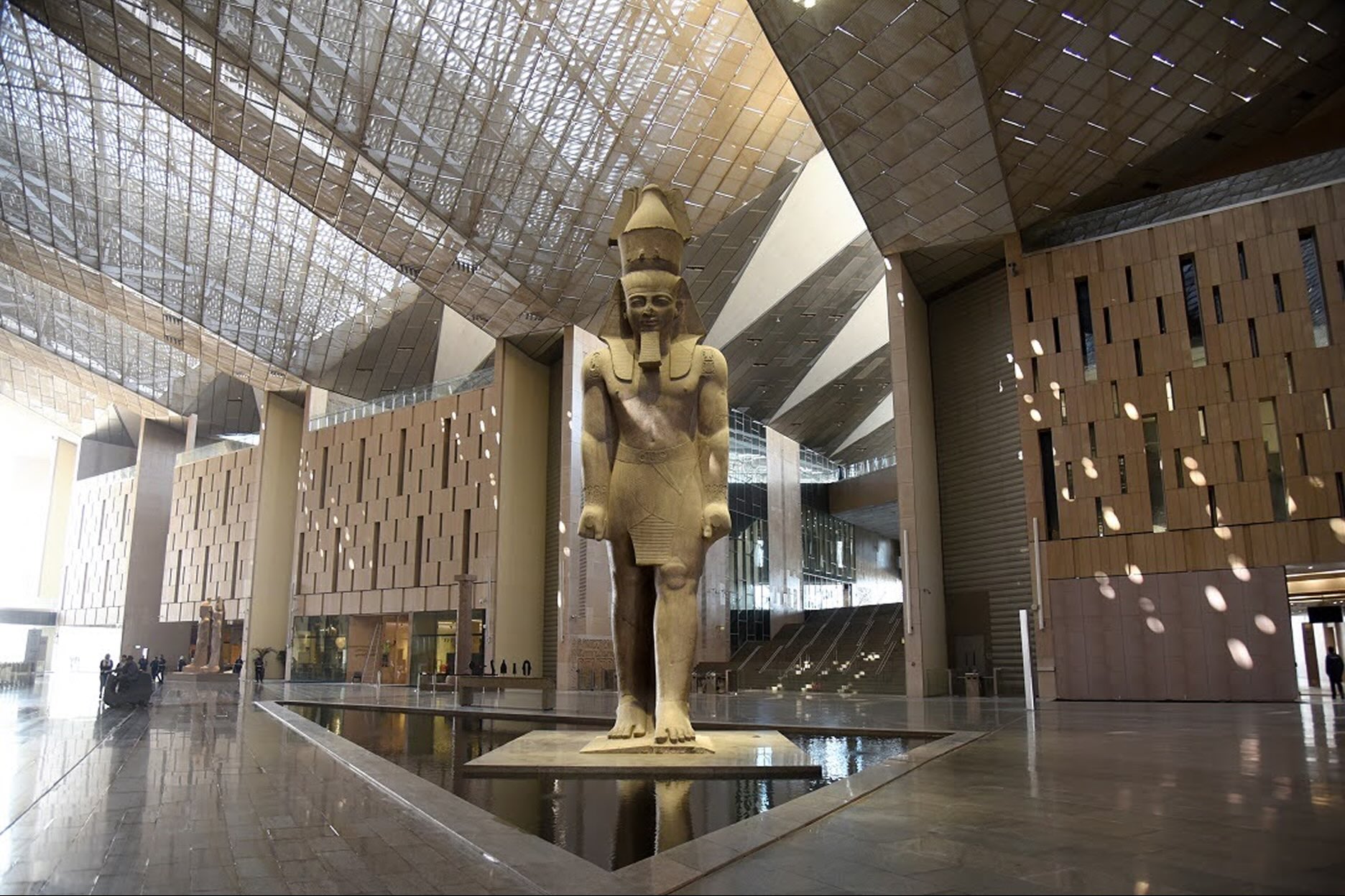
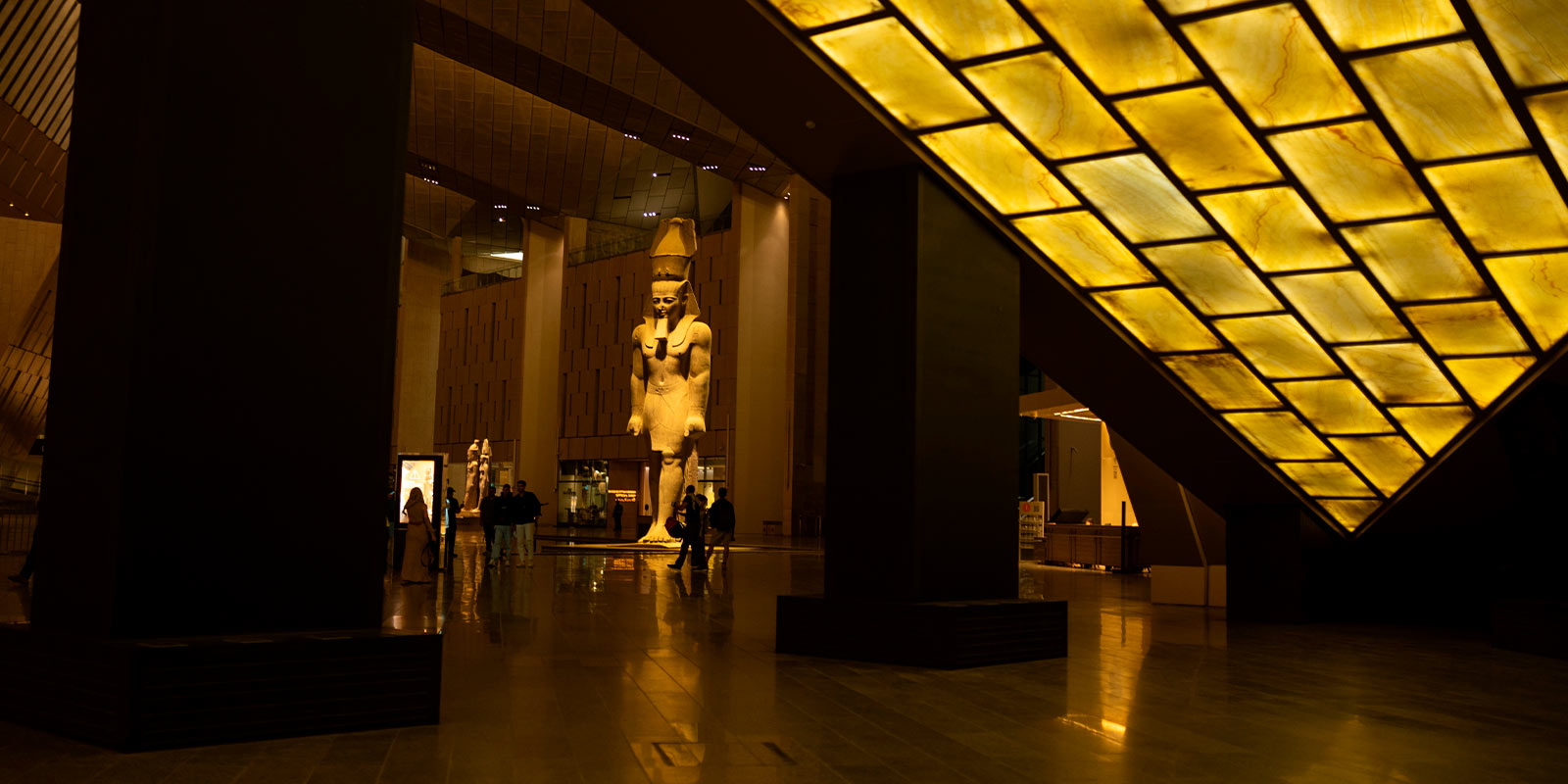
On the 22nd of October, a beam of light bathed the face of Ramesses II to celebrate the day of his birth, just as it has occurred in the sanctuary of Abu Simbel—built in his honour—for over three millennia. The ancient pharaoh continues to reign after all this time, though he now does so from the centre of the majestic Grand Atrium of the Grand Egyptian Museum (GEM). The secret of this astronomical alignment, so crucial to the construction of Ancient Egypt’s monuments, lies within the design of the main entrance facade.
There, the names of every pharaoh gather like a silent multitude. Each tile bears a royal cartouche—the oval frame that has enclosed their titles throughout the dynasties. However, there is one exception: a solitary opening breaks the sequence. This is the conduit through which the sun enters the GEM on the 22nd of February and the 22nd of October—the dates of Ramesses II’s coronation and birthday, respectively—blessing the colossal eighty-tonne statue with its light. For the rest of the year, taking a humble second place to the sun's rays, ACCIONA Cultura is responsible for illuminating the pharaoh and the Grand Atrium where he resides.
This is just one of the ways we have helped breathe life into an archaeological museum destined to make history—the largest of its kind in the world. From illuminating the Grand Atrium to crafting tactile 3D-printed figures and installing the structural elements of the Tutankhamun Gallery, we have been privileged to help realise a space that serves as a sanctuary for a nation’s historical pride.
Join us as we take you behind the scenes of our work at the Grand Egyptian Museum (GEM)—a landmark project now welcoming its first visitors, more than two decades after the first stone was laid.
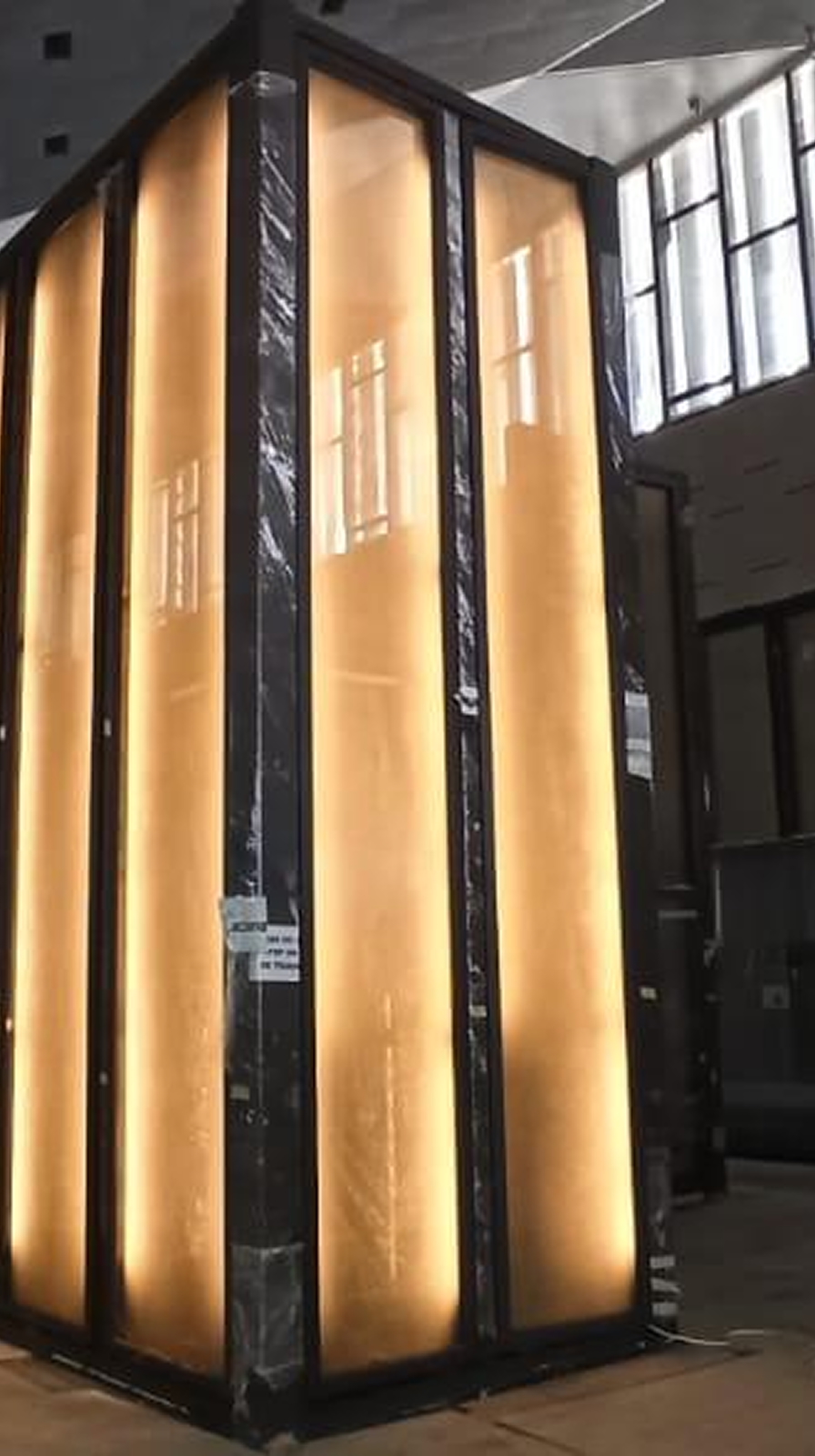
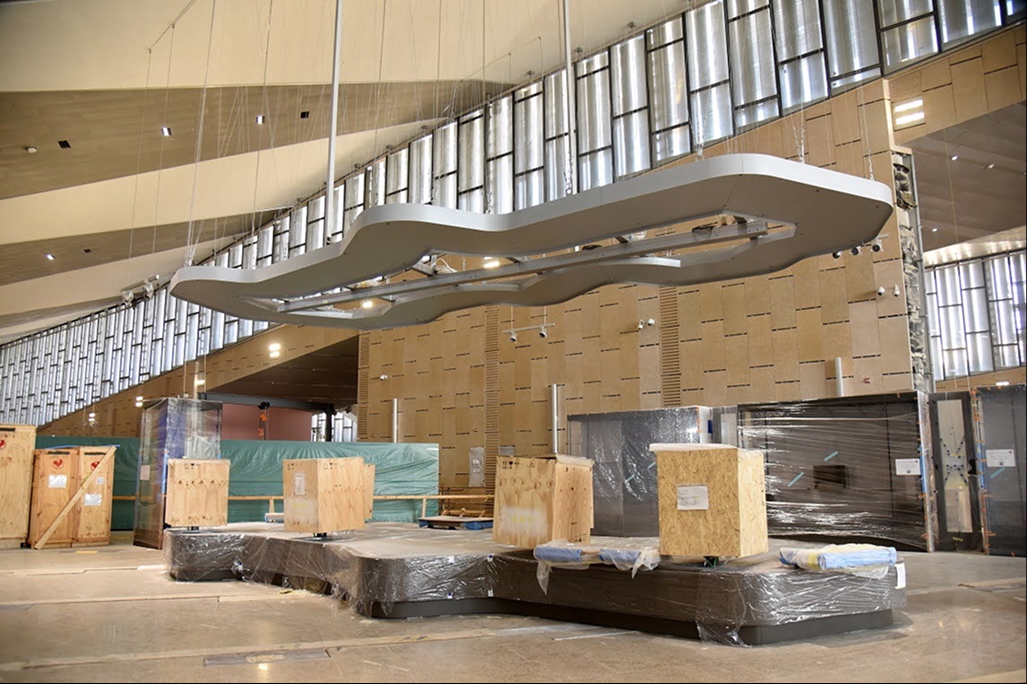
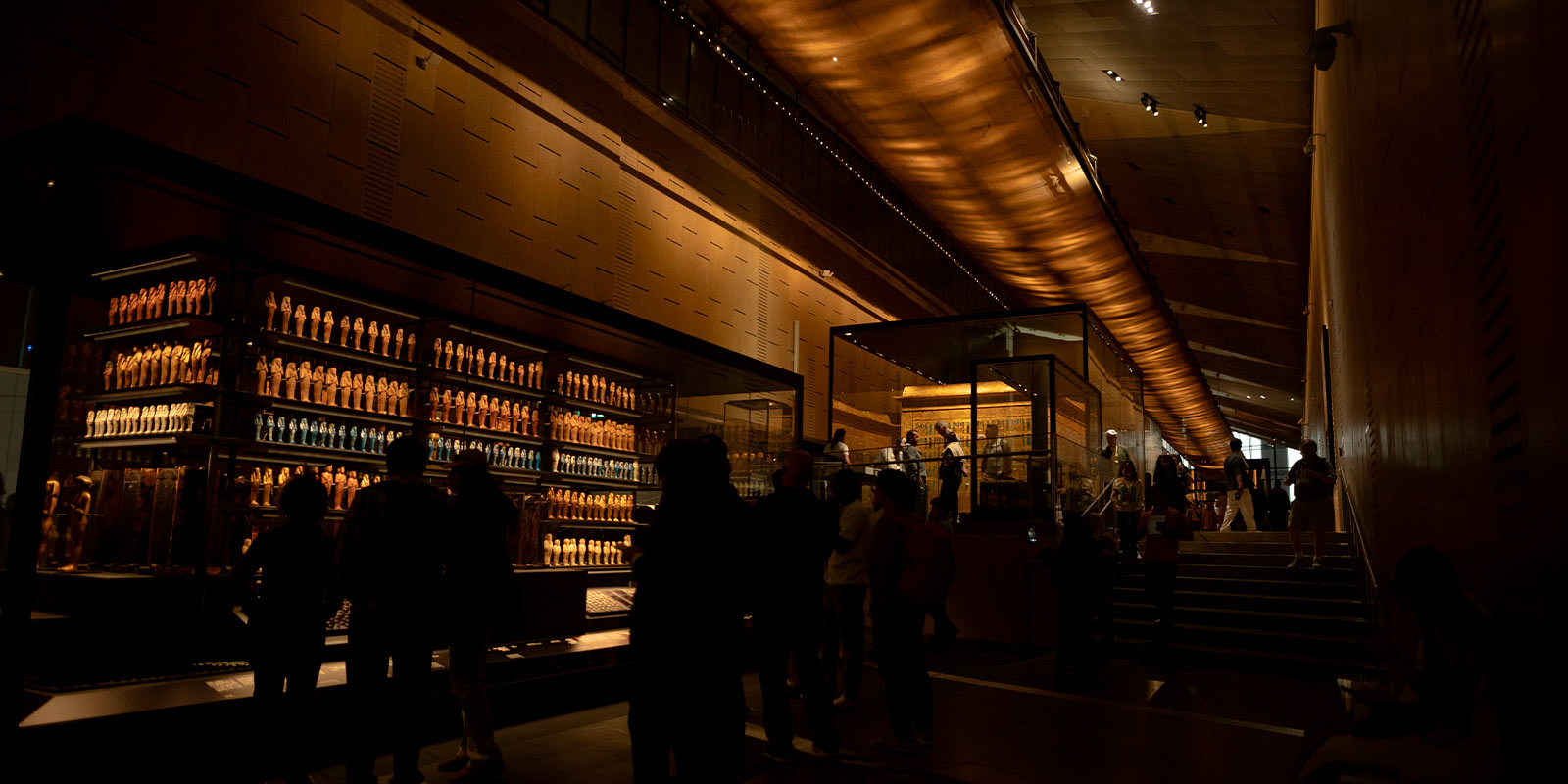
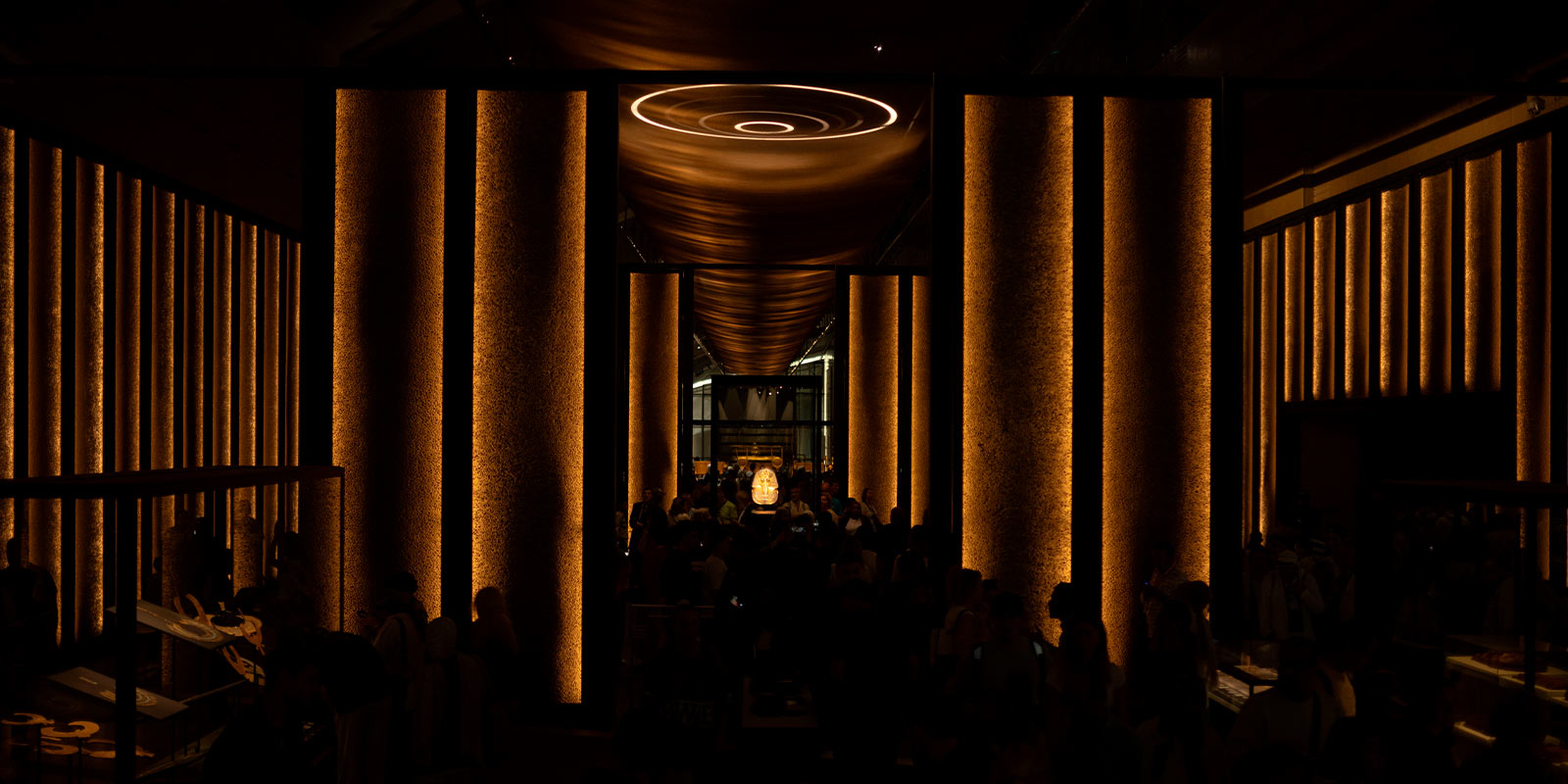
“Wonderful things.” These were the words famously whispered by archaeologist Howard Carter as he peered into the newly discovered tomb of the boy king. Today, visitors to the Tutankhamun Gallery are likely to echo that sentiment as they encounter the thousands of artefacts recovered from that final resting place, including the iconic golden burial mask. Soaring above this priceless collection is the “cloud ceiling”—a 160-metre-long installation crafted from a delicate bronze mesh.
Our task involved producing these bronze elements—a material that pays homage to Egypt’s ancient artistry. Logistical constraints meant the ceiling had to be installed using a bespoke system of pulleys, as the display cases and artefacts were already in situ. It was a feat of exquisite precision and a tribute to a legacy of incalculable value. To know that our work now presides over the gallery housing Tutankhamun’s mask—the museum's crowning jewel—remains one of the most rewarding aspects of the entire project.
With the heights secured, we turned our attention to the “guardians” that flank the collection. We manufactured a series of six-metre-high bronze-clad steel panels to provide a solemn, protective embrace for these treasures. Beside them, black information panels, printed on fine silk, serve as elegant guides for the visitor's journey. Maneuvering each of these steel panels—some weighing hundreds of kilograms—into place with millimetre-precision was another of those moments where time itself seemed to stand still.
While the bronze ceiling and the treasures it shelters transport us back through the millennia, a smart glass panel—which turns opaque to project a 3D scan of the tomb—showcases the technological future of heritage. In an instant, the pharaoh’s original resting place is digitally invoked. Through this immersive experience, visitors can finally step into Carter’s shoes and witness those “wonderful things” just as he did over a century ago.
Pharaoh Akhenaten, the father of Tutankhamun, founded his monotheistic cult following a revelation from the heavens: that the Sun was the one true god. Many of his representations feature solar rays descending upon him. Almost three and a half millennia later, a cloud of benign rays swept across the GEM’s galleries and his son’s artefacts: these were the beams of our structured light scanners.
It was a moment where cutting-edge technology met the deepest reaches of history. Our specialists deployed high-definition portable laser systems for the delicate items of Tutankhamun’s funerary collection, alongside larger equipment with a range of dozens of metres for the more formidable statues. Over four days, dozens of pieces were scanned for a truly remarkable purpose.
Making history, culture, and art accessible to all, without distinction, is a founding principle of the GEM. The museum turned to us to help make this vision a reality.
Through the scanning of these artefacts, we have helped pioneer a new museum concept. This approach, powered by 3D printing, takes treasures out from behind the glass and places them directly into the hands of visually impaired visitors.
The galleries now offer the chance to experience high-quality replicas of these figures, crafted by ACCIONA Cultura and displayed on bespoke accessibility tables. We fashioned these tables from Verdi Ghazal, a natural stone sourced from Egypt's own quarries. Positioned alongside the originals, these replicas range from royal sculptures to the mask of Tutankhamun himself.
This technology’s reach extends far beyond accessibility. It enabled the creation of a life-sized bronze replica of Tutankhamun’s head—commissioned from a British studio following the digital reconstruction of his mummy. It also allowed us to produce educational figures for the mummification table in the GEM Children's Museum and a scale model of the Valley of the Kings. In other projects, our use of large-scale 3D printing for unique, monumental pieces, alongside the provision of high-definition digital models for online consultation, further ensures the enduring survival of a global heritage.
The Grand Atrium, home to the statue of Ramesses II and illuminated by our team, leads into one of the GEM’s most breathtaking spaces: the Grand Staircase.
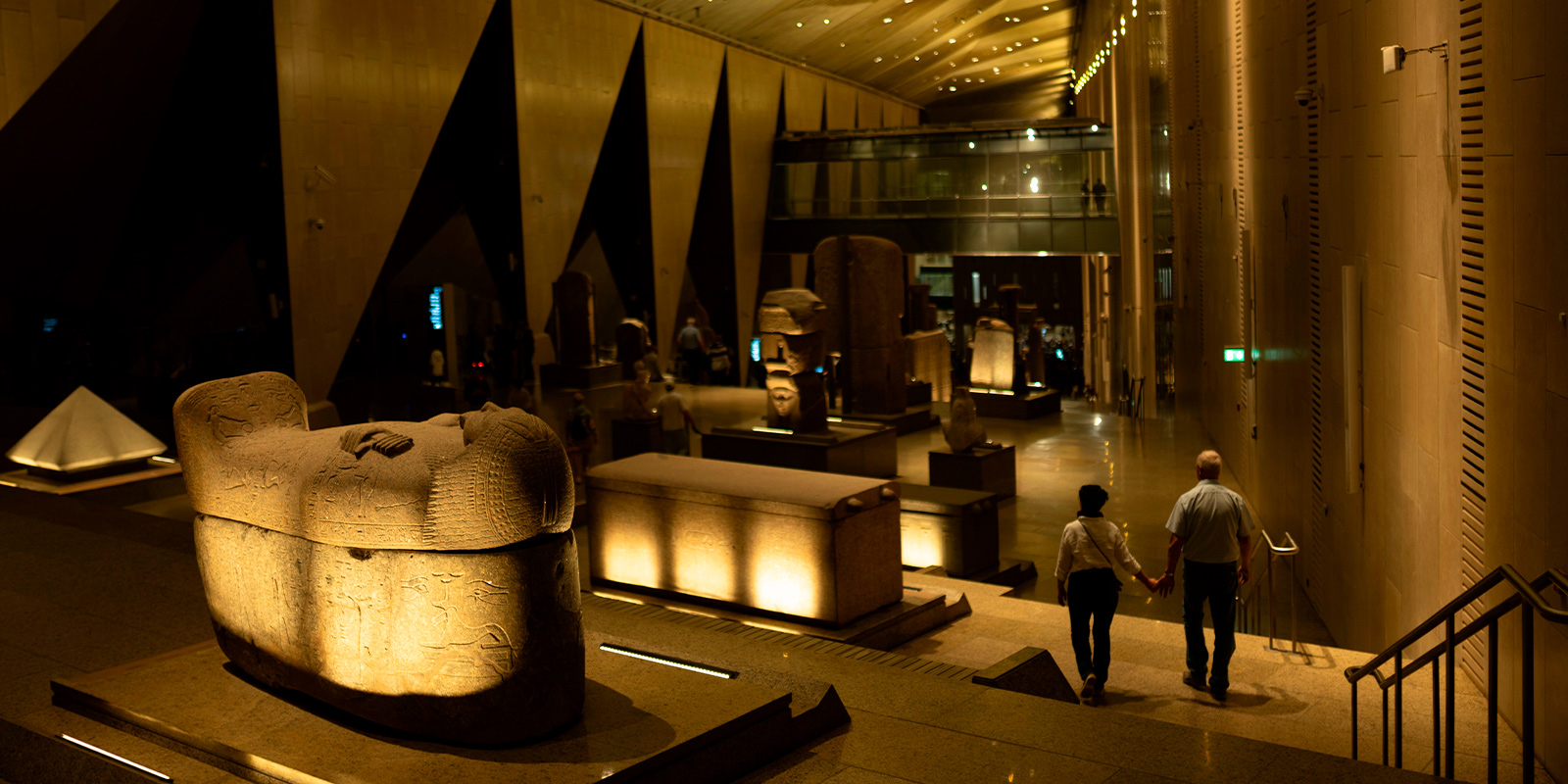
Here, step by step, visitors traverse the history of this great nation, from Predynastic Egypt to the twilight of the empire. Each landing serves as a milestone, occupied by plinths where statues of Seti II, Ramesses III, and Hatshepsut—and the imposing head of Akhenaten—engage in a silent, eternal dialogue.
ACCIONA Cultura applied its expertise here through a lighting scheme that asserts the unique character of every piece. We also prepared a replica of the King List, providing a sweeping perspective of these reigns across the ages.
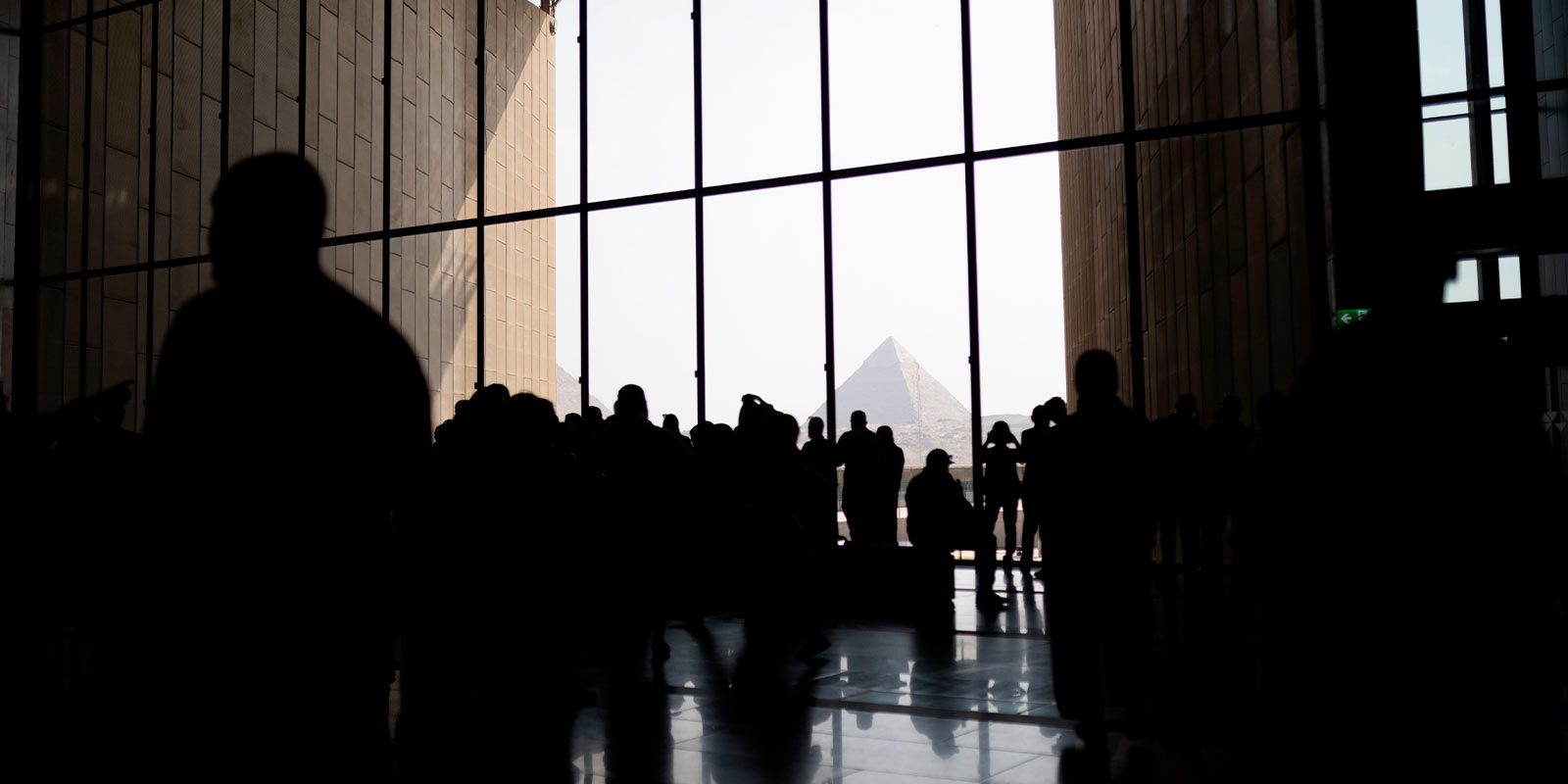
Shortly after the GEM opened its doors, one of our specialists recounted the pride with which a Cairo taxi driver spoke of the new museum, noting his poignant use of the possessive “ours.”
While the impact on tourism is almost incalculable—with the museum expected to draw five million visitors annually—there is a deeper, more intangible value at play. It is found in the profound respect for a nation’s heritage that will be fostered in every visitor to the Tutankhamun Gallery, and the seeds of wonder sown in the children who come to see, touch, and feel the past at the GEM Children’s Museum.
Culture is the true soul of a nation, and we have been privileged to give that spirit a physical form within the historic halls of the Grand Egyptian Museum.
Discover more about our work at the Grand Egyptian Museum.
NEXT IN Summit is the forum driven by ACCIONA Cultura that gathers international cultural leaders to share experiences, debate ideas, and analyse the challenges that will define the future of the cultural industry.