
For millennia, humanity had observed horses in full stride, but it was not until Eadweard Muybridge captured the movement in a series of snapshots that it was finally proven whether all four hooves ever left the ground at once. To achieve this in 1878, he positioned a line of 24 early cameras along the track, their shutters triggered by tripwires as the horse passed. The technique became known as chronophotography.
ACCIONA Cultura’s involvement across successive world expos shares something of this continuous sequence of images: a series of snapshots capturing the world’s cultural evolution through technology. Since our initial engagement at Expo ’92 in Seville, we have spent three decades spanning diverse countries and cultural sensibilities, both witnessing and driving their evolution.
This cultural and technological evolution has placed us on the frontline of change, allowing us to shape the dreams and ambitions of nations through their pavilions at major world expos ever since.
Behind each of these events lie years of preparation, the integration of multiple disciplines, and the foresight to anticipate the transformation of our world. In turn, this expertise has informed all our other projects, be they museums, exhibitions, or immersive experiences. While this journey defines our own story, it is also a chapter in global history.
In the late 20th century, when Expo ’92 took place in Seville, photography had advanced, yet its core medium—celluloid—was not so different from the wet collodion plates used by Muybridge. What had changed dramatically, however, was the scale of projection.
In those early projects, ACCIONA Cultura, then operating under the name General de Producciones y Diseño, carried out several key interventions. Among them, we animated the facades of the Expo ’92 pavilions using techniques that would today be called projection mapping, but which at the time relied on high-powered spotlights and celluloid film.
This was far from our only contribution. We created the scenography for the Mexico Pavilion, curated and mounted display content for the “El Oro de América” (The Gold of America) Museum within the Plaza de América Pavilion, and undertook the design, production, and operation of the “Fiesta Noche” (Night Party) multimedia show on the Lago de España.
Our work also extended to the pavilions of Africa, the Caribbean Countries, Egypt, Russia, and Madrid, alongside other Spanish autonomous communities such as Castilla-La Mancha and Cantabria, where we created a scenographic reproduction of the Altamira Cave.
The global success of that edition catapulted ACCIONA Cultura to a leading position for subsequent expos, where the challenges—and their solutions—grew increasingly complex and impactful.
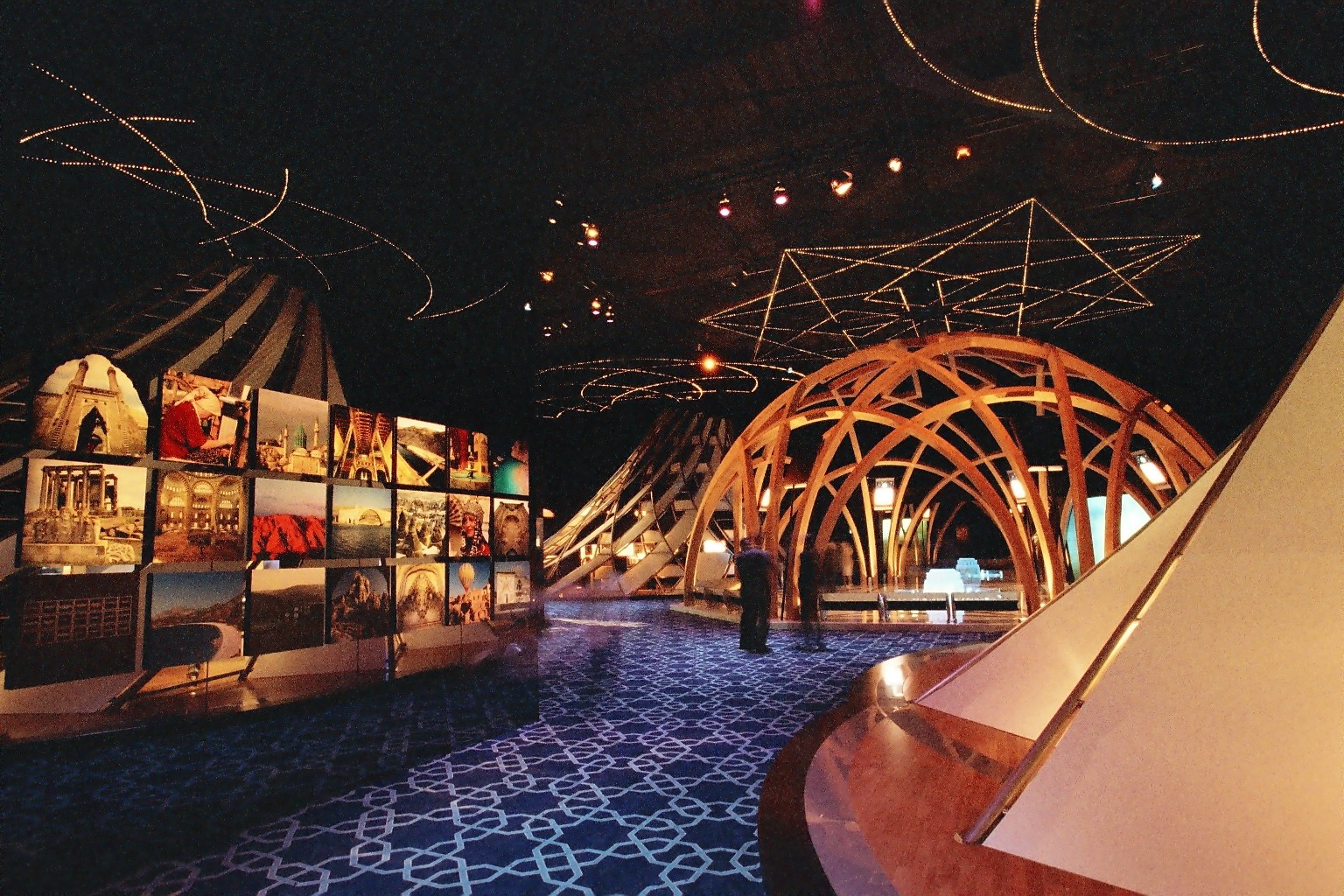
Much of this growing ambition was technological. At Expo ’98 in Lisbon, we consolidated major projects for countries including Mexico, Tunisia, and Turkey, as well as the United Nations. Later, at Expo 2005 in Aichi, Japan, ACCIONA Cultura demonstrated its ability to deliver an installation with immersive three-dimensional effects and pioneering audiovisual technology. This was realized at the Turkey Pavilion, which earned the BIE Gold Medal for Best Pavilion.
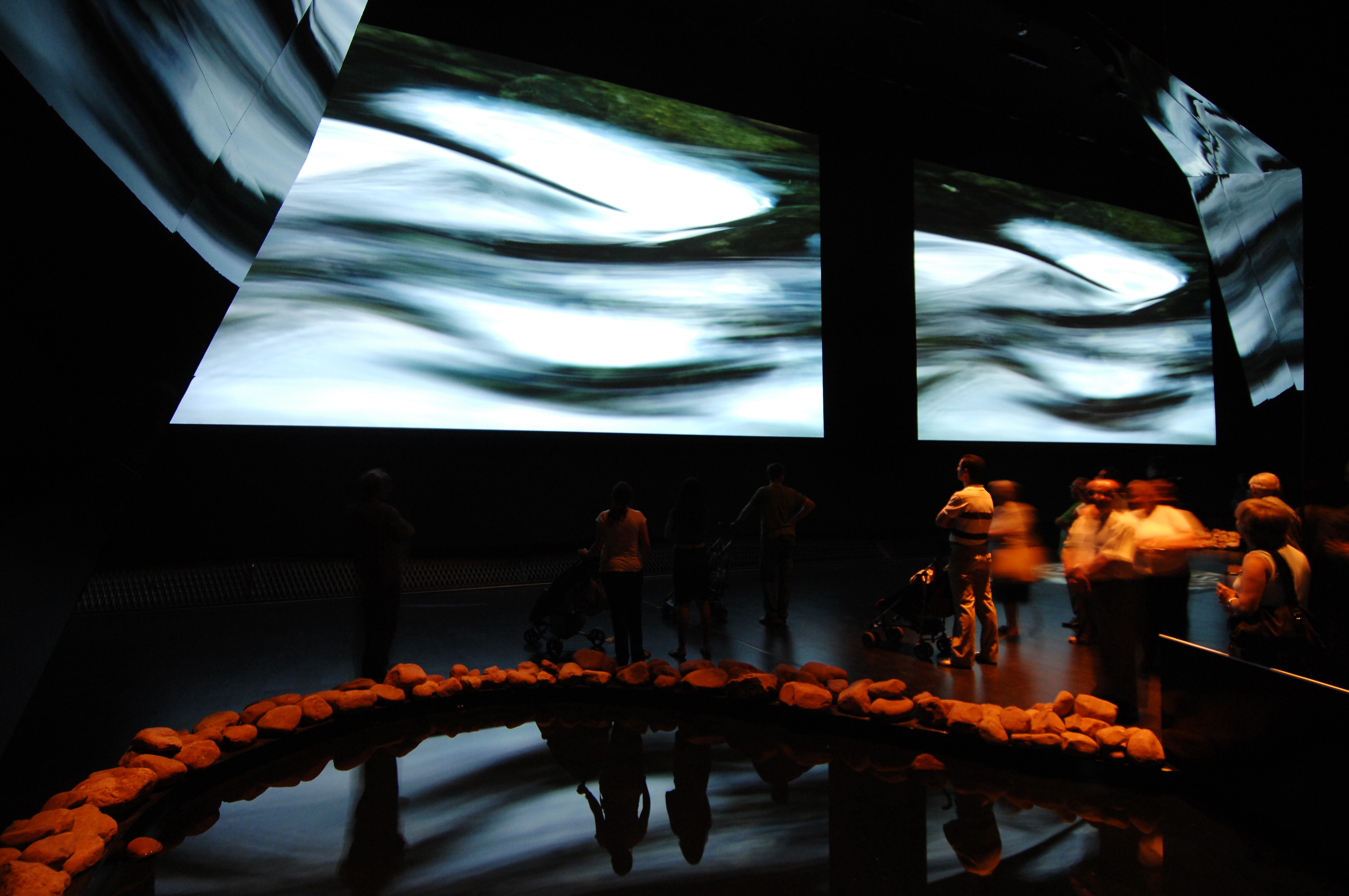
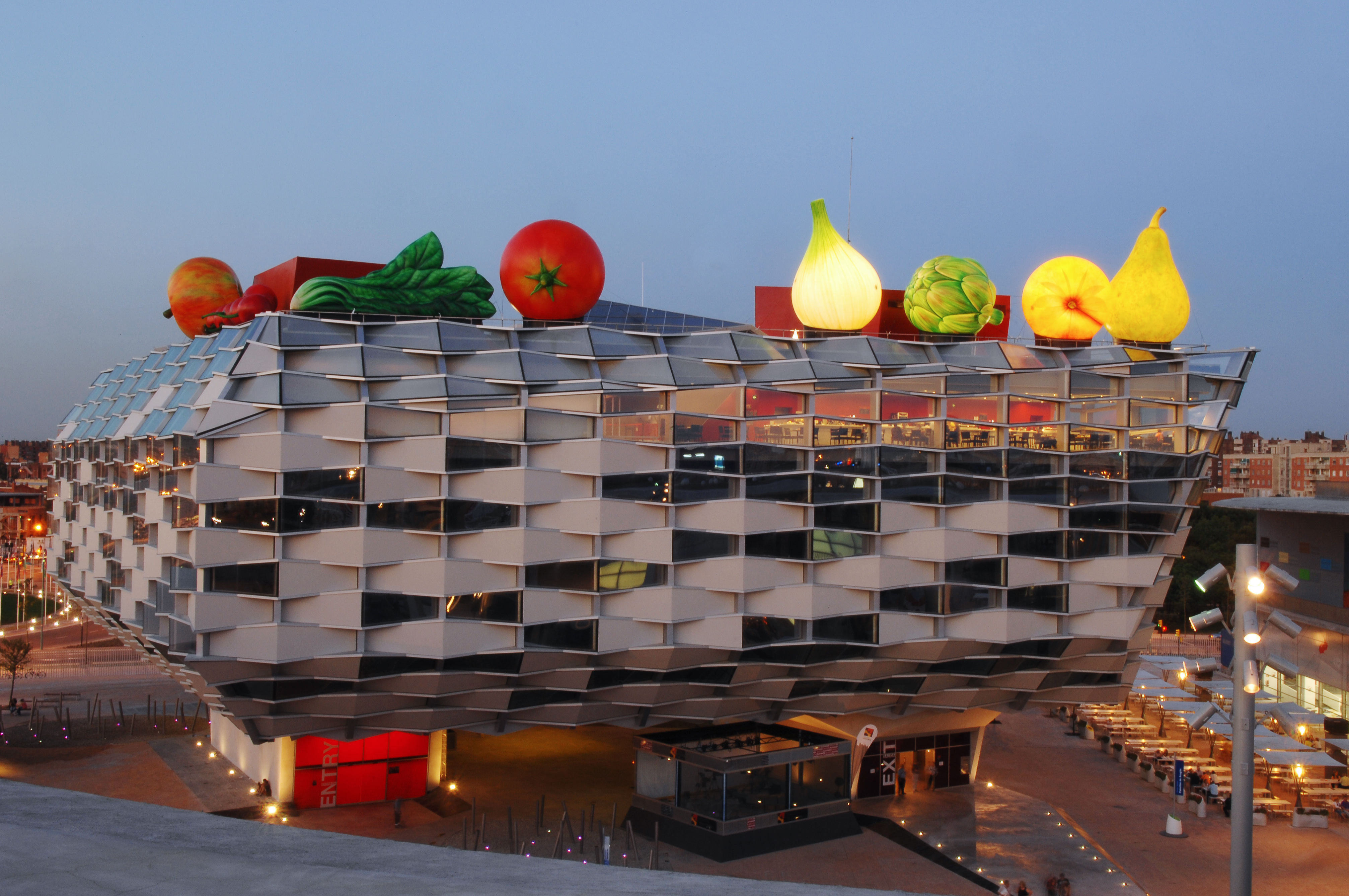
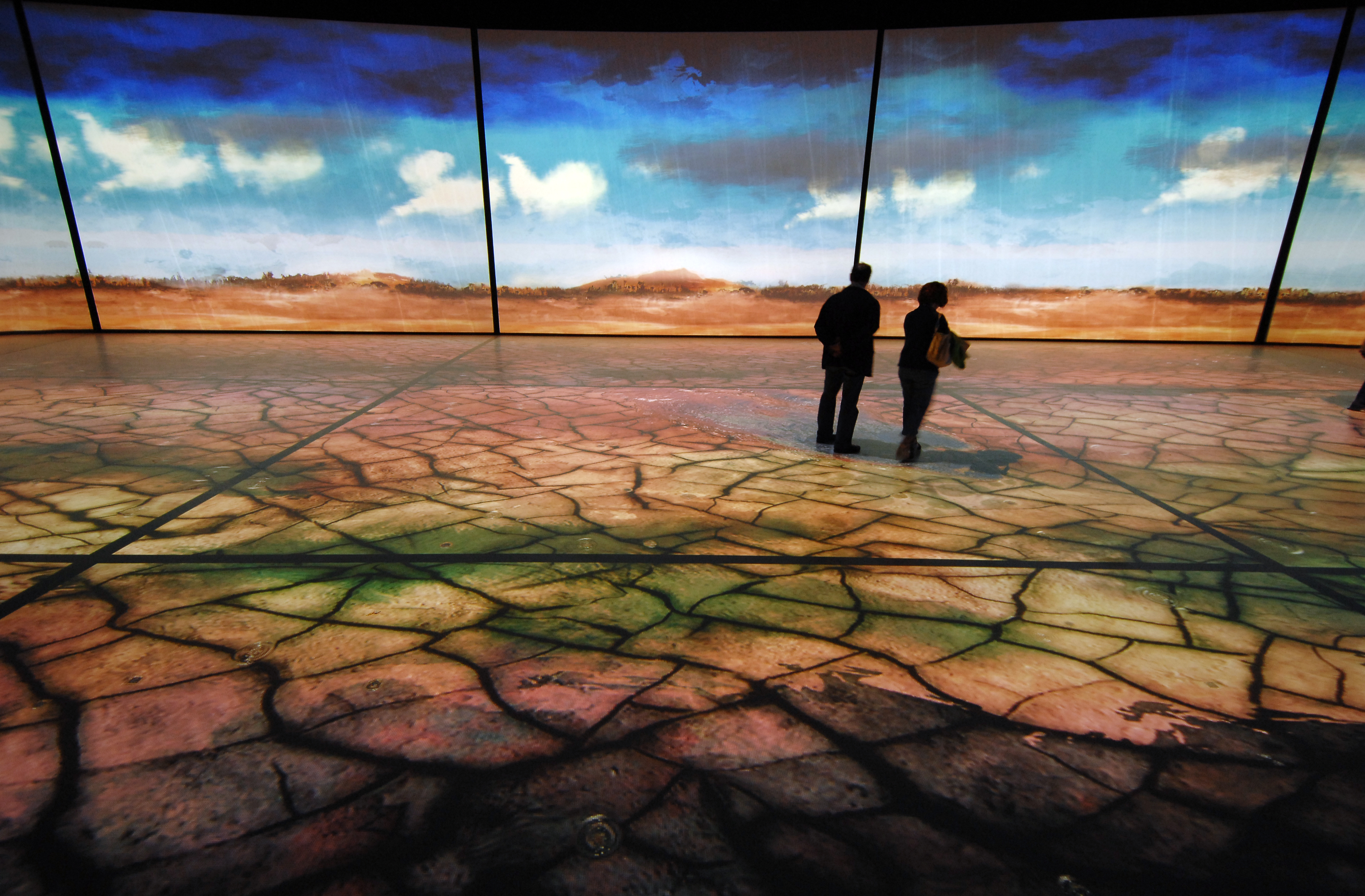
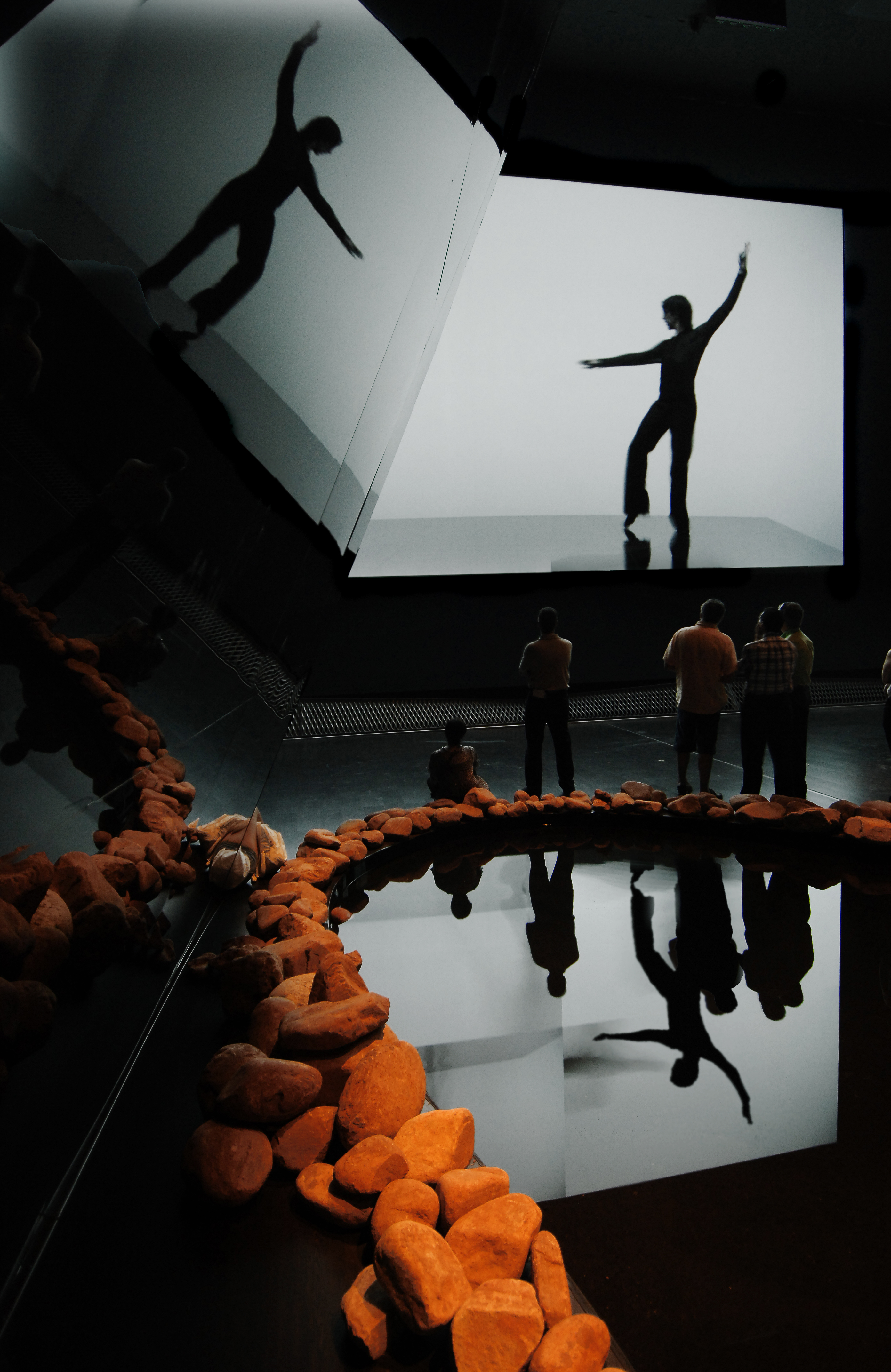
The subsequent edition, Expo 2008 in Zaragoza, which focused on the theme “Water and Sustainable Development”, proved that technical capability was the finest vessel to bring artist and filmmaker Carlos Saura’s artistic vision of water to life at the Aragon Pavilion. That year was also marked by our standout work on the pavilions for Oman, Russia, and Spain.
At Expo Shanghai 2010, we secured a second consecutive Gold Medal for Best Pavilion, alongside that year’s Red Dot Design Award. This recognition was achieved through the Saudi Arabia Pavilion, which became one of the most visited venues on the expo grounds thanks to a pioneering immersive concept.
Upon entering the exhibition floor, visitors traversed the interior of the vessel-shaped pavilion, named The Treasure, aboard a continuously moving travelator.
There, they were enveloped by large-format multi-projections across a colossal 1,600 m² concave surface, where a rich display of dynamic imagery, textures, and patterns immersed the senses in the wonders of the country. Suddenly, the boundary between the physical world and its digital representation began to blur.
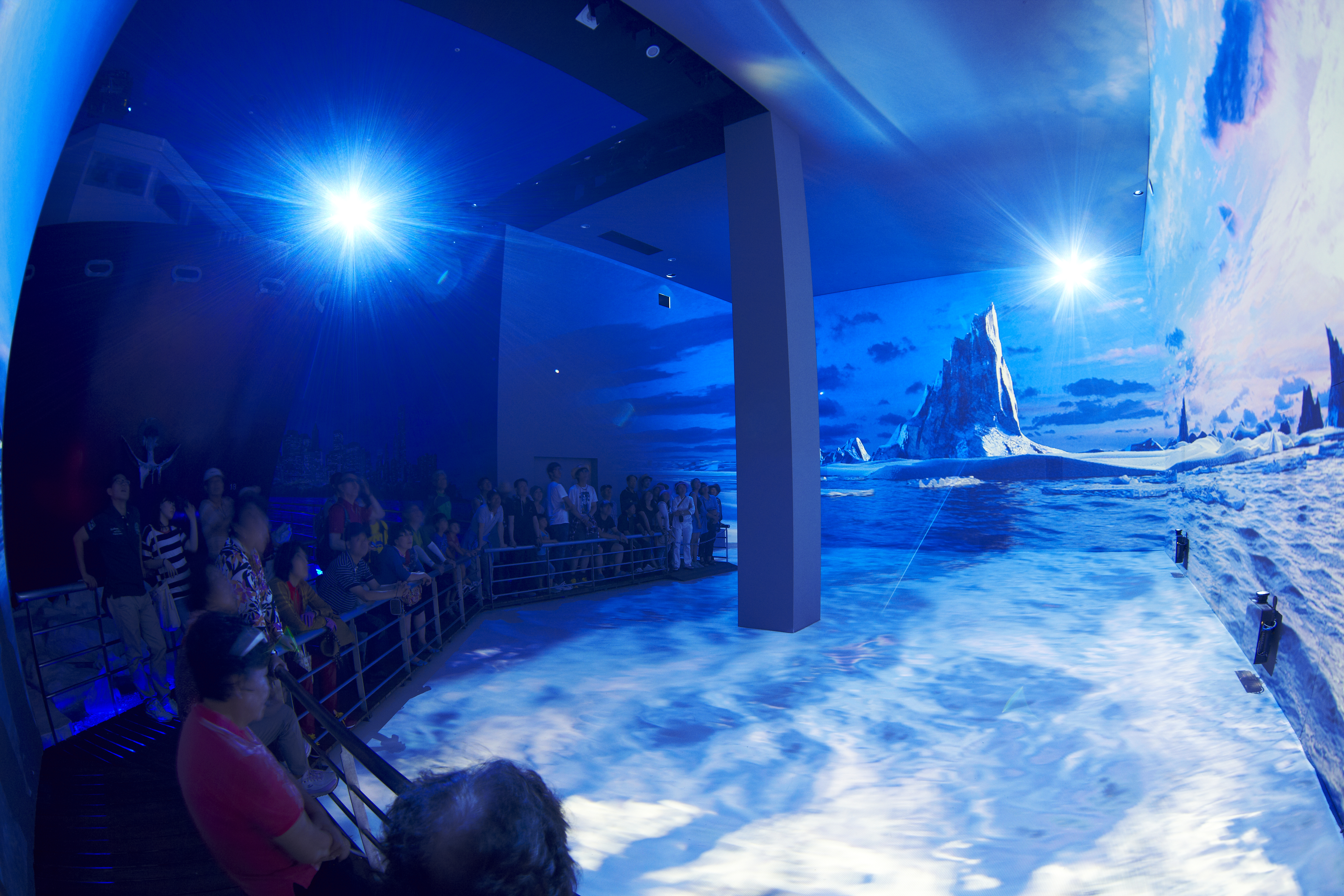
Our work at Expo 2012 in South Korea carried a strong architectural focus, epitomised by our contribution to the Russia Pavilion. There, we focused our efforts on recreating ice tunnels and an interactive icebreaker simulator. ACCIONA Cultura also showcased its expertise in software development and systems integration.
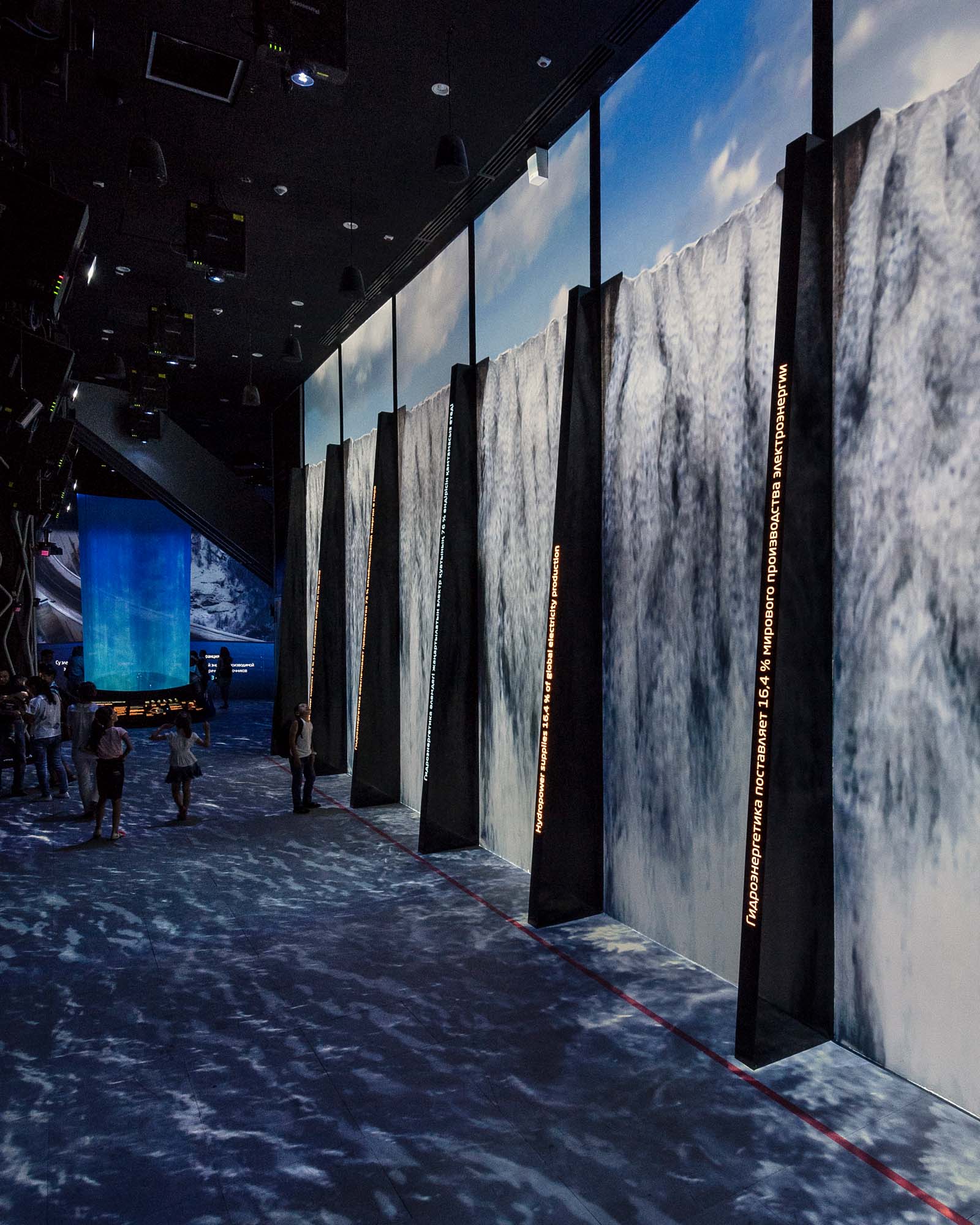
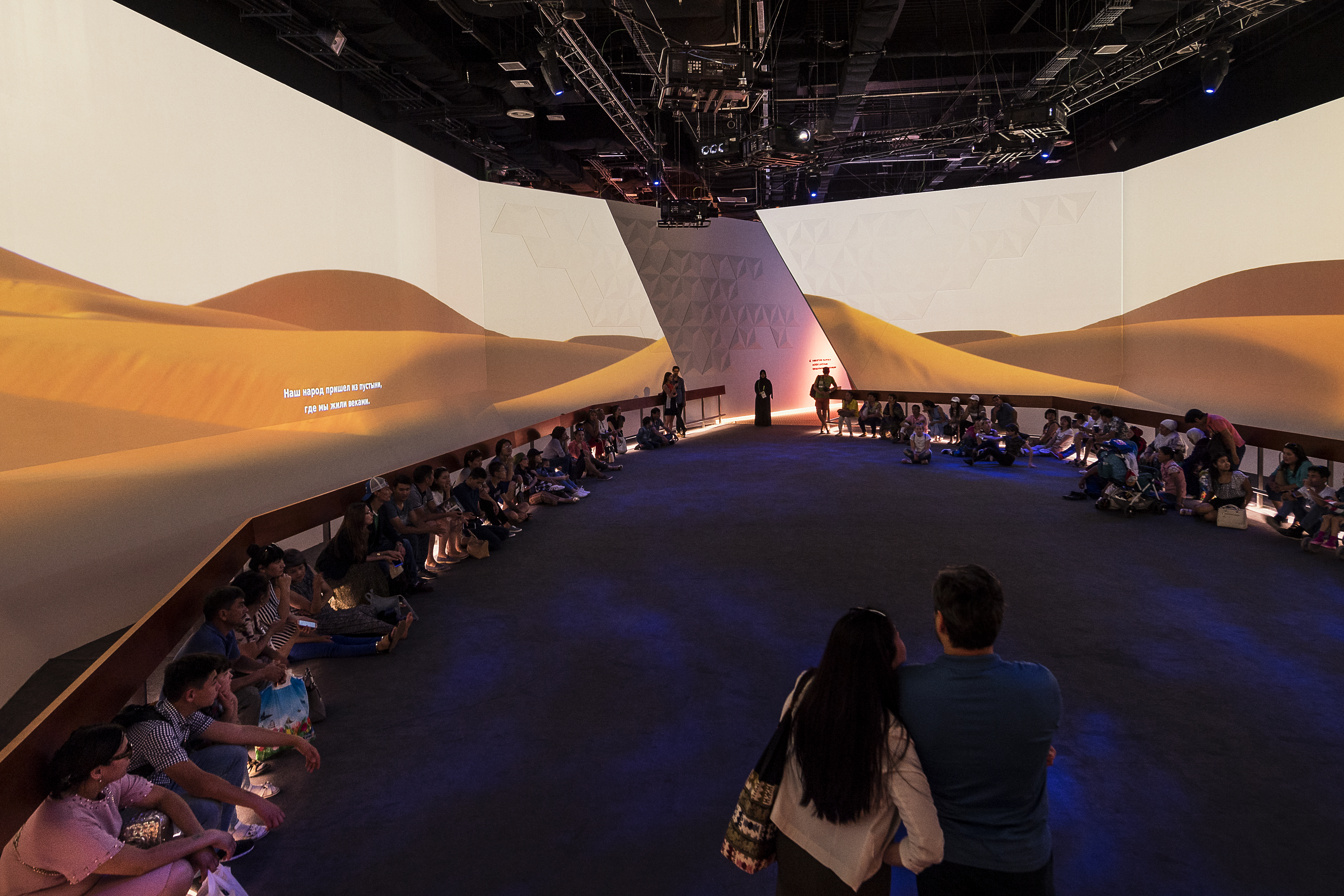
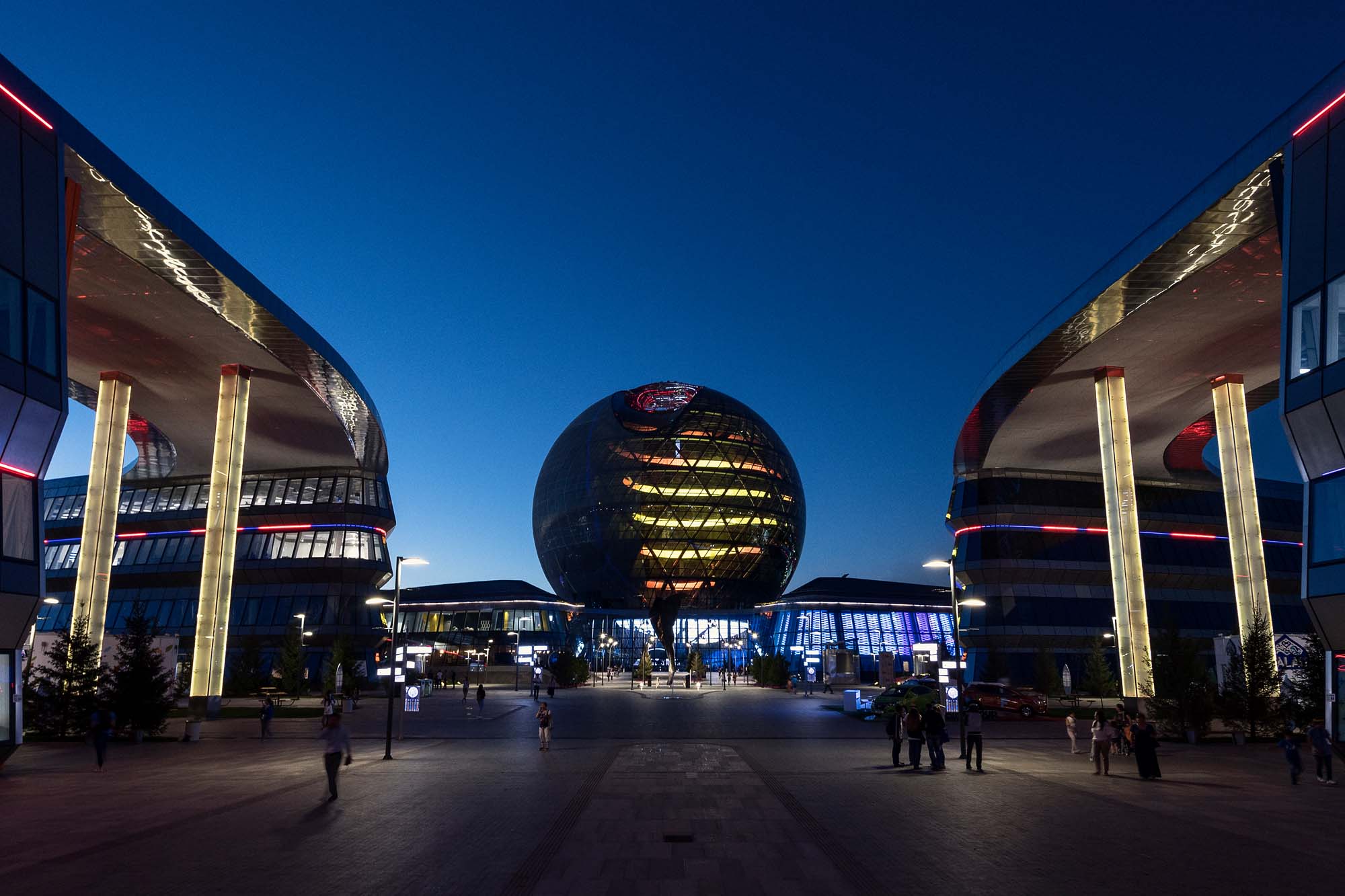
This trajectory continued at Expo 2017 in Astana, Kazakhstan, where we executed two of the eight floors that comprised the National Pavilion, designed as a giant glass sphere. On the first floor, we developed a large-format video mapping show synchronized with an interactive performance inspired by Kazakh mythology, while the second floor was devoted to hydropower.
Another showcase at the expo was the magnificent United Arab Emirates Pavilion, where we installed a 270-degree screen with floor and ceiling projections. This immersive space presented the past, present, and future of the nation’s energy technology, ranging from traditional sustainable methods to cutting-edge renewable solutions. The installation earned an Honorable Mention at the Exhibitors Magazine Editor’s Choice Awards.
This proved to be ACCIONA Cultura’s most ambitious world expo to date. At Dubai 2020, we worked on more than five pavilions, including the UAE Pavilion, the Spain Pavilion, the Thematic District Pavilion, The Good Place Pavilion, and Terra – The Sustainability Pavilion.
Our work across various areas of Terra, spanning over 10,000 m², invited visitors to marvel at large-scale installations, including jellyfish aquariums and a forest of pulsating roots. Outside, an array of solar trees supplied the venue with renewable energy.
These immersive features guided visitors through humanity’s relationship with nature and the path toward a greener future. The pavilion undoubtedly raised the bar for sustainable design solutions, earning a LEED Platinum sustainability certification alongside established accolades in design and architecture.
Beyond this landmark project, we demonstrated our capacity across project management, technical implementation, interface design, fabrication, installation, and fit-out for other key venues. Among the most spectacular was the UAE Pavilion designed by Santiago Calatrava, which featured several custom immersive experiences.
Each of these world expos has tested our creative, logistical, and technological capabilities, but above all, our capacity to anticipate how world expos can remain relevant in a hyperconnected world.
Achieving this requires holistic experiences that invite audiences to become active participants in global culture, engaging them on a deeply human level. This encompasses design, construction, content development, technical execution, and maintenance, alongside visitor experience design, curatorial research, production management, exhibition programming, and strategic marketing.
Amidst these technical and creative capabilities, and emerging technologies like artificial intelligence, the central focus will remain humanity and our capacity for wonder. ACCIONA Cultura is already developing the next generation of solutions to bring that vision to life.
NEXT IN Summit is the forum driven by ACCIONA Cultura that gathers international cultural leaders to share experiences, debate ideas, and analyse the challenges that will define the future of the cultural industry.