
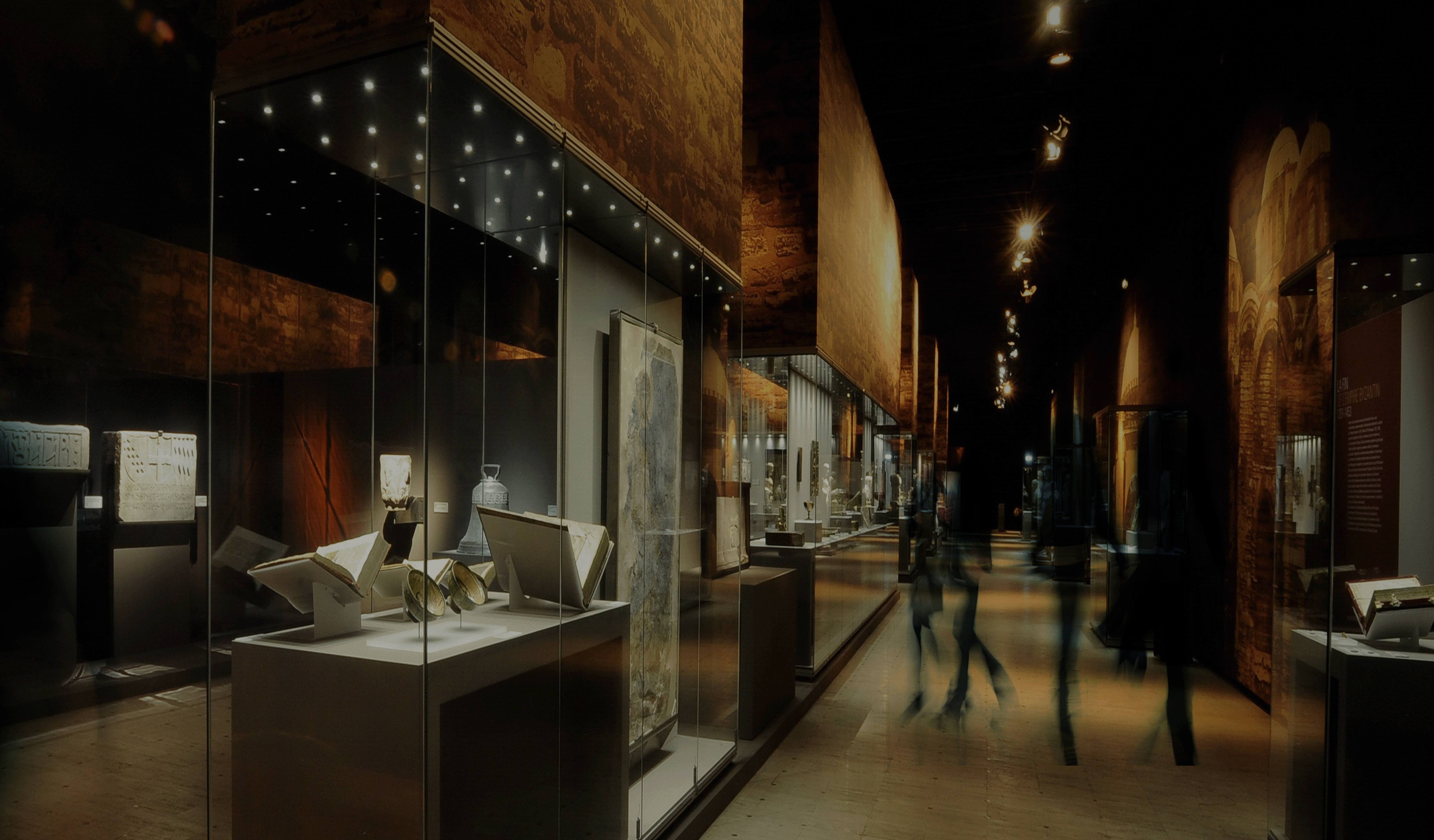
The most forward-thinking exhibitions now measure their impact not only in visitor numbers but in carbon reduction, community engagement, and regenerative design. The future of exhibition-making lies in ensuring that from concept to dismantling, every show gives back more than it takes — environmentally, socially, and emotionally.
The Science Museum Group across the UK has woven sustainability into its exhibition production strategy, developing replicable plans that reduce waste, energy, and transport emissions across all venues.
It has made its commitment to reach net zero by 2033 one of its core values and their open-access Sustainability Policy offers frameworks for museums worldwide, encouraging low-carbon materials, modular construction, and local supplier networks. Each exhibition becomes a platform not only to educate visitors about the planet but to model care for it through design.
“Nothing is absolute. Everything changes, everything moves, everything turns, everything flies and disappears,” wrote Frida Kahlo. ACCIONA’s traveling exhibition Life and Work of Frida Kahlo was from the offset created to leave a positive footprint. Designed using life cycle analysis, every component — from structure to soundscape — was chosen for minimal environmental impact.
The production team tracked and offset unavoidable emissions through reforestation projects in Spain and Mexico, turning carbon neutrality into part of the artwork’s legacy. With over a million visitors across China, Colombia, Argentina, United Kingdom and Spain, it’s one of the most awarded immersive cultural experiences in the world, demonstrating that technological innovation and environmental ethics can co-exist.
Another exhibition by ACCIONA Cultura turned environmental consciousness into its main theme. The Net Zero exhibit at the King Abdulaziz Center for World Culture (Ithra) in Saudi Arabia, featured immersive design with large-scale 3D-printed concrete walls, cutting waste by 60% compared to conventional builds, and all materials were modular and reusable across venues. Even unavoidable emissions were offset through wind power projects in Mexico, making Net Zero a living case study in circular exhibition design.
The recent exhibition More Than Human at the Design Museum in London explored regenerative design through projects that house insects, oyster-reef wave breakers, and biomaterials that grow instead of being manufactured. “We’re stuck in a carbon accountancy model which is basically about doing everything exactly the same as we currently do, just a little bit less bad,” Justin McGuirk, curator, told The Guardian. “Every design project needs to think about how it’s affecting other species, or either limiting its impact on other species, or ideally promoting the health of other species,” he said.
The exhibition featured more than 50 artists, architects, and designers, including artworks for octopus by Japanese artist Shimabuku and an immersive seaweed installation by German artist Julia Lohmann created especially for the exhibition. By shifting from human-centered design to multi-species collaboration, the show invited visitors to imagine a future where architecture coexists with living systems.
Even when exhibitions are temporary, they can be transformative. By embedding environmental awareness into their DNA, museums and cultural producers are turning creative practice into a catalyst for ecological and social renewal. Each exhibition becomes a small ecosystem — a model of how imagination, responsibility, and artistry can work in harmony.
NEXT IN Summit es el encuentro impulsado por ACCIONA Cultura que reúne a referentes internacionales del ámbito cultural para compartir experiencias, debatir ideas y analizar los retos que marcarán el futuro de la industria cultural.
saber más