
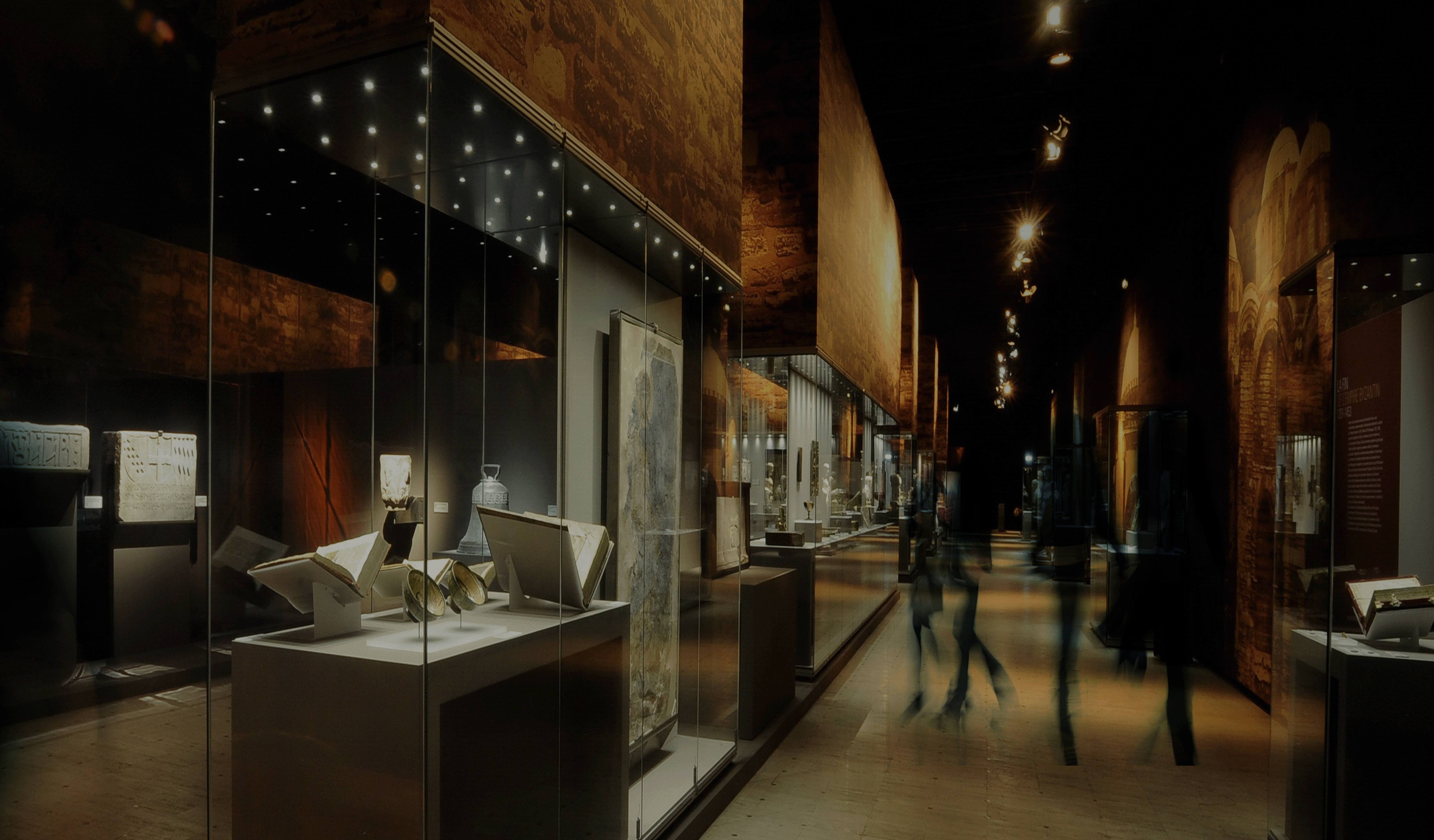
Across the world, museums are reimagining what access truly means. No longer confined to ramps and signs, accessibility has evolved into a creative and ethical framework — one that invites participation across all senses and abilities.
Designers and curators are asking new questions: How can an exhibition be heard, felt, or even smelled? How can physical and cognitive diversity shape the way stories are told and shared?
From London to Dallas to Madrid, a new generation of institutions is proving that accessibility isn’t an afterthought — it’s a design language. And when inclusion becomes the foundation, the museum becomes not just a space to look at, but a space to belong.
At the Wellcome Collection’s Being Human gallery, accessibility begins with design, not retrofitting. Opened in 2007, the Wellcome is one of London’s most inclusive museums. The permanent exhibition integrates tactile floor markings, wheelchair-accessible cases, Braille and large-print labels, audio guides, and British Sign Language interpretation. Visitors can touch, smell, or listen to multisensory works that explore the human condition through health and art.
This approach stems from a collaboration between curators, disability advocates, and designers such as the award-winning architecture collective Assembly — ensuring that accessibility is built into the creative process.
In Madrid, the Museo Tiflológico de la ONCE in Madrid is literally a museum to see and touch. Designed for visitors who are blind or visually impaired, it offers tactile models of monuments, Braille and macro-character signage, podotactile flooring, and audio-beacon guidance systems connected to a mobile app.
The museum’s philosophy is simple: culture must be sensory, not exclusionary. Its tactile exhibitions invite everyone to explore architectural icons—from the Taj Mahal to the Alhambra—through touch.
At the Dallas Museum of Art, the groundbreaking Speechless: Different by Design exhibition reimagined accessibility as sensory liberation. Six international designers created environments where visitors could walk barefoot, feel sound through vibration, and communicate without words.
“I imagined that we would create immersive spaces within the museum gallery setting that allow people to explore the senses and think about how objects can be experienced without using text as a mediator,” Sarah Schleuning, curator of the exhibition wrote in the American Alliance of Museums blog.
The show featured a tactile textile cave, an interactive sound sculpture, and a quiet decompression space for sensory relief — transforming the gallery into a shared field of empathy and play. Developed with neuroscientists and accessibility experts, Speechless proposed that inclusive design is not about limitation, but expanding the range of human.
From Madrid’s tactile models to Dallas’s silent conversations, museums are proving that accessibility is a catalyst for innovation. Designing for every body — every sense, every rhythm — doesn’t just open doors; it reshapes the museum itself into a space of empathy and belonging, where inclusion and imagination advance together.
NEXT IN Summit is the event promoted by ACCIONA Cultura that brings together international leaders in the cultural field to share experiences, discuss ideas and analyze the challenges that will shape the future of the cultural industry.