
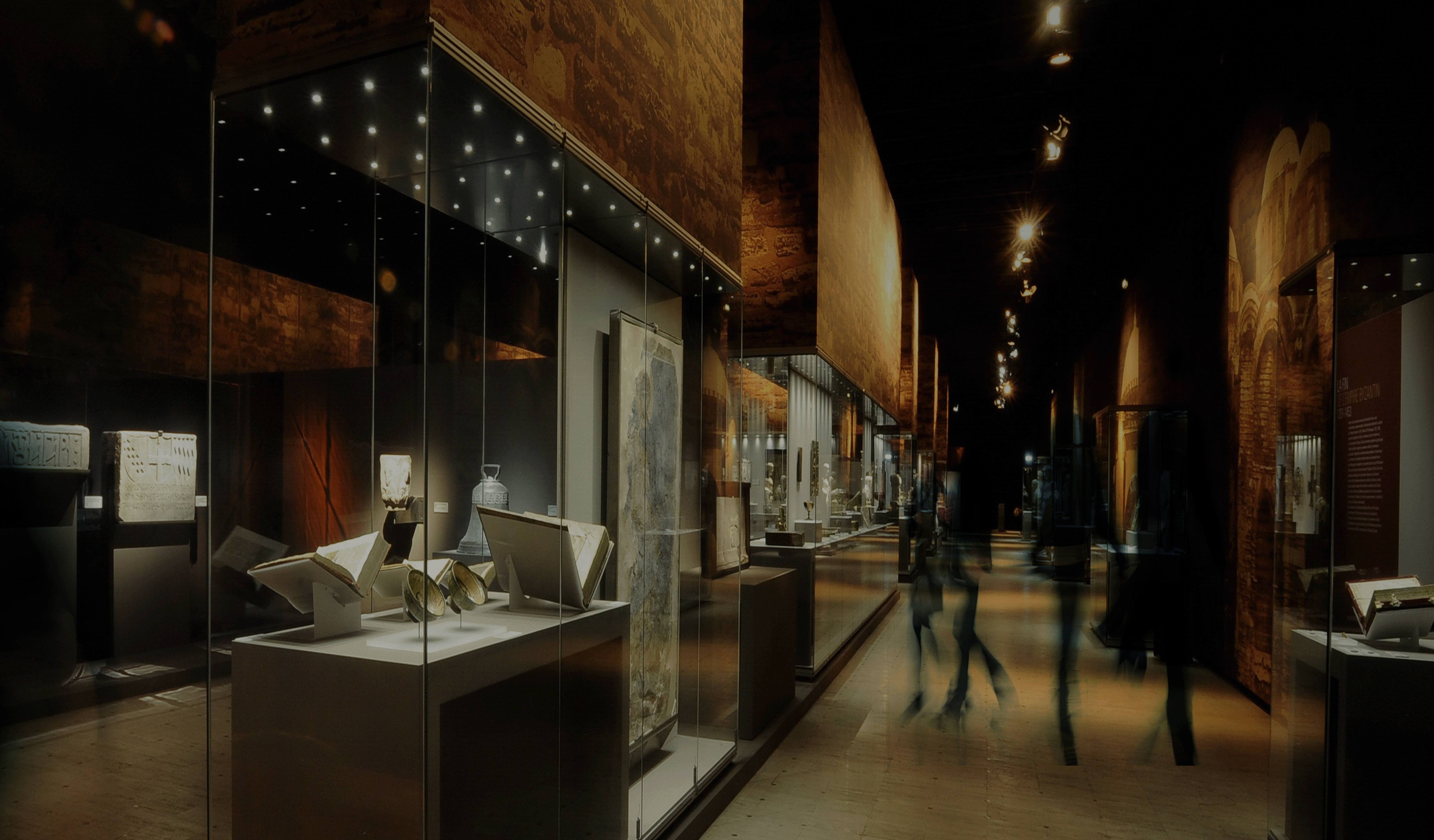
Temporary exhibitions have long been synonymous with creative reinvention — and, unfortunately, with waste. Every season brings new display materials, often discarded after use. Today, a rising number of cultural institutions are reimagining that cycle through circular exhibition design — embedding reduction, reuse, and recycling into the concept from the start, aligning with the United Nations’ Sustainable Development Goal 12 — Responsible Consumption & Production.
At the Musée du quai Branly – Jacques Chirac, circular strategies are now standard practice. The museum collaborates with the same scenographic team across successive shows, enabling nearly all exhibition furniture to be reused. It maintains a catalogue of reusable elements, tracks them with specialized software, and repurposes shipping materials.
Since 2020, the museum has partnered with La Réserve des Arts, a Paris-based nonprofit promoting circularity in the creative industries. Through this collaboration, exhibition materials — from scenic panels to textiles — are recovered and redistributed to artists, designers, and schools, extending their useful life far beyond the gallery walls. The result is a creative ecosystem that aligns environmental sustainability with artistic continuity. Located at the foot of the Eiffel Tower, the Quai Branly’s ongoing commitment to circularity stands as a model for how major institutions can merge aesthetics, ethics, and operational intelligence.
The Waste Museum in Ibadan, Nigeria transforms discarded materials into architecture, art, and education. Every surface of the museum is a statement: walls of recycled bottles, installations made from scrap metal, and furniture built from reclaimed wood. The space doubles as a public laboratory, teaching communities how to turn local waste streams into durable, meaningful creations. By redefining trash as raw material, the museum reimagines what cultural spaces — and circular economies — can look like in emerging cities.
At the King Abdulaziz Center for World Culture Ithra Center in Saudi Arabia, ACCIONA Cultura, the branch of ACCIONA focused on cultural and exhibition development, created the Net Zero exhibition using 3D-printed modular walls made for deconstruction and reuse in future venues, aligning with zero-waste principles. The Center and ACCIONA Cultura won the 2024 iF Design Award for “Net Zero”, which featured work by 19 international artists that focused on environmental challenges and sustainable solutions. “It is crucial for us to address these topics and develop sustainable solutions for the museum and exhibitions sector, enabling active participation in the continuing global conversation,” said Candida Pestana, curator, when the award was announced. “Our goal is to share the genuine perspectives, thoughts and insights of these artists with the audience.”
Circular exhibition design is more than a logistical tweak — it’s a cultural commitment. By planning from day one for reuse, museums preserve resources, reduce waste, and keep options open for future reuse. With partners like ACCIONA Cultura applying circular strategies to both temporary exhibitions and ephemeral architecture, the line between museum and sustainable lab begins to blur. In this new paradigm, nothing is disposable, only renewable.
NEXT IN Summit is the event promoted by ACCIONA Cultura that brings together international leaders in the cultural field to share experiences, discuss ideas and analyze the challenges that will shape the future of the cultural industry.