
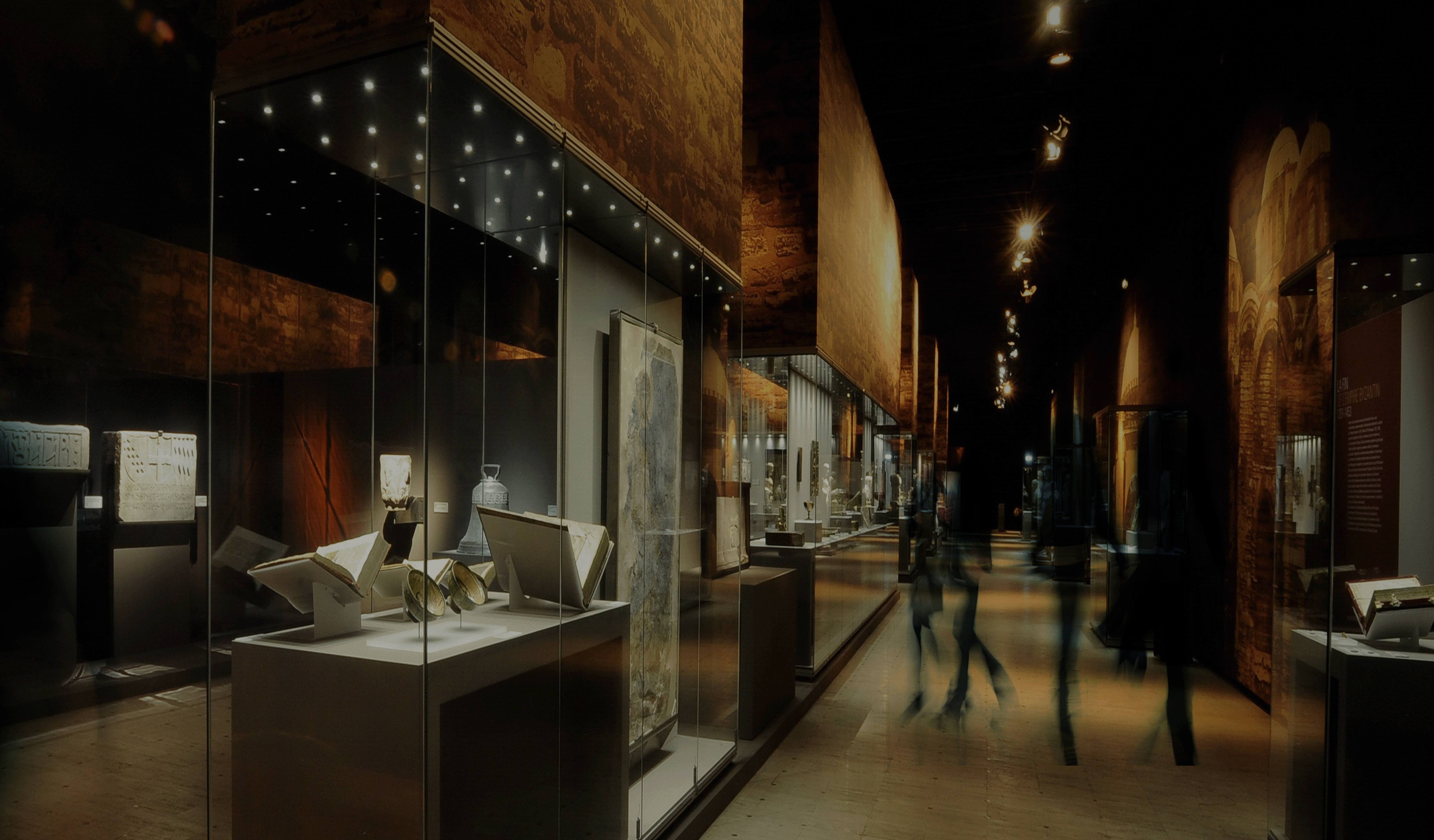
Ephemeral architecture has long been central to exhibition design — yet its impermanence often leads to waste. Today, institutions are embracing a “build-to-deconstruct” approach, selecting low-impact materials that can be reused, recycled, or returned to nature. That way, waste, energy use and toxic emissions are reduced across a project’s full life cycle, while maintaining curatorial flexibility and aesthetic quality.
This shift toward regenerative exhibition design supports the goals of the United Nation’s Sustainable Development Goals (SDG) SDG 7 (Affordable and Clean Energy) and SDG 12 (Responsible Consumption and Production), proving that sustainability and spectacle can coexist beautifully.
“The hat is a matter of architectural balance: it crowns the building of the dress,” said Cristóbal Balenciaga in the 1940’s when his hat atelier was gaining popularity in Paris and Madrid. The traveling exhibition Balenciaga: The Elegance of the Hat employed reusable modular walls for carpentry, paper and fabric for graphic productions instead of PVC, cardboard for direct printed posters, and 100% cotton for printed texts and images. Organized by the Museo Cristóbal Balenciaga in Getaria in collaboration with Disseny Hub Barcelona, the wood and stationery used were FSC certified, ensuring they are sourced from sustainably managed forests. Additionally, water-based paints and inks replace solvent-based options, and the exhibition employed energy-efficient LED lighting.
For the milestone show Waste Age: What Can Design Do? the Design Museum’s team replaced traditional drywall and vinyl signage with unfired clay bricks, reused plinth materials, and handheld inkjet lettering that needed no adhesive films. The project served as a live prototype for the London institution’s The Environmental Impact Toolkit, reducing waste by over 60% and saving 6 tons of CO₂ emissions compared to a conventional build.
In Cologne, Museum Ludwig’s sustainability pilot took a literal approach to “green” with Green Modernism: The New View of Plants. The museum reimagined its roof as an ecological terrace using repurposed shipping crates as planters, digital-only catalogues, and Blue Angel-certified printing for what remained in print.
When Beavers to Weavers: The Wonderful World of Animal Makers opened at Leeds City Museum, it wasn’t just a celebration of animal ingenuity — it was also a model of ecological exhibition design. Every material choice was guided by responsibility and creativity.
The museum’s design team prioritized low-impact suppliers and sustainable materials across every phase. Exhibition graphics were printed on cardboard instead of PVC, walls were finished using recycled paint from local social enterprise Seagulls Reuse, and labels were produced on-site using the museum’s historic Albion press with reclaimed woodblocks. Even the materials for visitor workshops were salvaged through SCRAP, a community creative reuse center.
Low-impact exhibition design represents a shift toward long-term responsibility. Each material choice is both a creative and ethical decision — a reminder that how we build to display art is itself part of our cultural legacy.
NEXT IN Summit is the event promoted by ACCIONA Cultura that brings together international leaders in the cultural field to share experiences, discuss ideas and analyze the challenges that will shape the future of the cultural industry.